Who Invented the Internet? The Complete History Explained
The internet has become an essential part of modern life. From checking emails and watching videos to online shopping, education, banking, and artificial intelligence, almost everything today depends on the internet. Yet one question continues to surprise many people: Who actually invented the Internet?
The answer is not as simple as naming a single inventor. Unlike the light bulb or the telephone, the Internet was not created by one person. It was built gradually over several decades by brilliant scientists, engineers, researchers, universities, and government organizations working together to solve a common problem: how computers could communicate with each other.
In this article, we’ll explore the fascinating journey of the Internet, from its earliest ideas during the Cold War to the global network that now connects billions of people. We’ll also clear up common misconceptions, including the difference between the Internet and the World Wide Web.
What Is the Internet?
Before discussing its history, it’s important to understand what the Internet actually is.
The Internet is a massive global network that connects millions of computers, servers, smartphones, and other digital devices. These devices communicate using a common set of rules called Internet Protocol (IP). Thanks to these protocols, information can travel from one device to another within seconds, regardless of where they are located.
Every time you send a message, visit a website, stream a movie, or upload a photo, tiny pieces of information called data packets travel across this worldwide network before reaching their destination.
In simple words, the Internet is like a giant highway system, while websites, emails, and apps are the vehicles traveling on those roads.
The World Before the Internet
During the 1950s and early 1960s, computers were very different from the devices we use today. They were enormous machines that occupied entire rooms, consumed significant amounts of electricity, and were operated only by trained specialists.
These computers worked independently. If researchers at one university wanted to share information with another university, they often relied on printed documents, magnetic tapes, or physical storage devices sent through the mail.
This process was slow, expensive, and inefficient. As scientific research accelerated, experts realized there had to be a better way for computers to exchange information quickly.
The Cold War Sparked a Revolutionary Idea
One of the biggest reasons behind the development of the Internet was the Cold War between the United States and the Soviet Union.
During this period, governments became increasingly concerned about secure communication. Military leaders feared that if one communication center was destroyed during an attack, the entire communication system could collapse.
Researchers began asking an important question:
Can we build a communication network that continues working even if part of it is damaged?
This simple question eventually led to one of the greatest technological breakthroughs in human history.
Paul Baran’s Groundbreaking Concept
In the early 1960s, American engineer Paul Baran introduced an innovative idea known as packet switching.
Instead of sending information as one large message, Baran suggested breaking it into many small packets. Each packet could travel through different routes across the network before being reassembled at the destination.
This approach offered several major advantages:
- Greater reliability
- Improved efficiency
- Better security
- No single point of failure
Although Paul Baran did not build the modern Internet himself, his ideas became one of its most important foundations.
The Birth of ARPANET
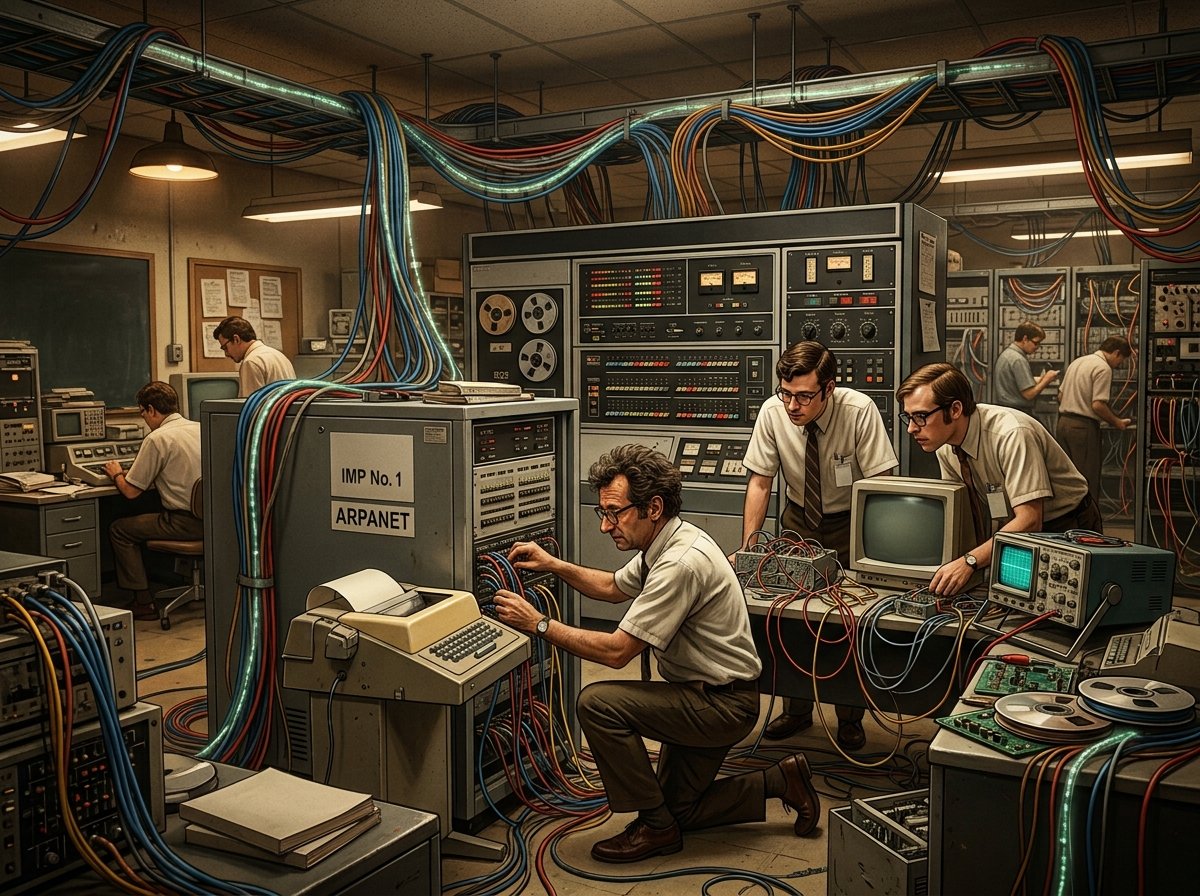
In 1969, the United States Advanced Research Projects Agency (ARPA) launched an experimental computer network known as ARPANET.
Many historians consider ARPANET to be the true ancestor of today’s Internet.
The first four computers connected through ARPANET were located at:
- UCLA
- Stanford Research Institute
- University of California, Santa Barbara
- University of Utah
For the first time in history, computers located in different places successfully communicated through a shared digital network.
This achievement marked the beginning of a completely new era in technology.
The First Message Ever Sent
One of the most memorable moments in Internet history occurred on October 29, 1969.
A researcher at UCLA attempted to send the word “LOGIN” to another computer connected through ARPANET.
However, after typing only the first two letters — “L” and “O” — the system crashed.
Although the attempt failed technically, those two letters became the first message ever transmitted over what eventually evolved into today’s Internet.
Sometimes history begins with surprisingly small moments.
How the Internet Continued to Grow
Following the success of ARPANET, more universities and research institutions wanted to join the network. Engineers continued improving communication methods, making networks faster, more reliable, and capable of connecting many different types of computers.
This rapid expansion proved that networking technology had enormous potential beyond military research. Scientists, educators, and technology experts began imagining a future where computers worldwide could exchange information almost instantly.
The Creation of TCP/IP Changed Everything
Although ARPANET proved that computers could communicate over a network, there was still a major challenge. Different networks used different communication methods, making it difficult for them to exchange information. A universal standard was needed.
In the early 1970s, computer scientists Vinton Cerf and Robert Kahn developed a revolutionary communication protocol called TCP/IP (Transmission Control Protocol/Internet Protocol). This protocol became the common language that allowed different computer networks to communicate with one another.
TCP is responsible for dividing information into small packets and ensuring that every packet reaches its destination correctly. IP is responsible for finding the correct path for those packets across multiple networks.
This innovation transformed isolated computer networks into one connected global system. On January 1, 1983, ARPANET officially adopted TCP/IP, and many experts consider this date the true birth of the modern Internet.
Who Really Invented the Internet?
One of the biggest misconceptions is that a single person invented the Internet. In reality, the Internet is the result of decades of collaboration between researchers, engineers, universities, and government organizations.
Several individuals made groundbreaking contributions:
- Paul Baran introduced the concept of packet switching.
- Donald Davies independently developed similar packet-switching ideas in the United Kingdom.
- Leonard Kleinrock contributed the mathematical foundations of data networking.
- Robert Kahn and Vinton Cerf created TCP/IP.
- Thousands of researchers continued improving networking technologies over many decades.
Instead of celebrating one inventor, history recognizes the Internet as one of humanity’s greatest collaborative engineering achievements.
The Difference Between the Internet and the World Wide Web
Many people use the terms Internet and World Wide Web (WWW) interchangeably, but they are not the same thing.
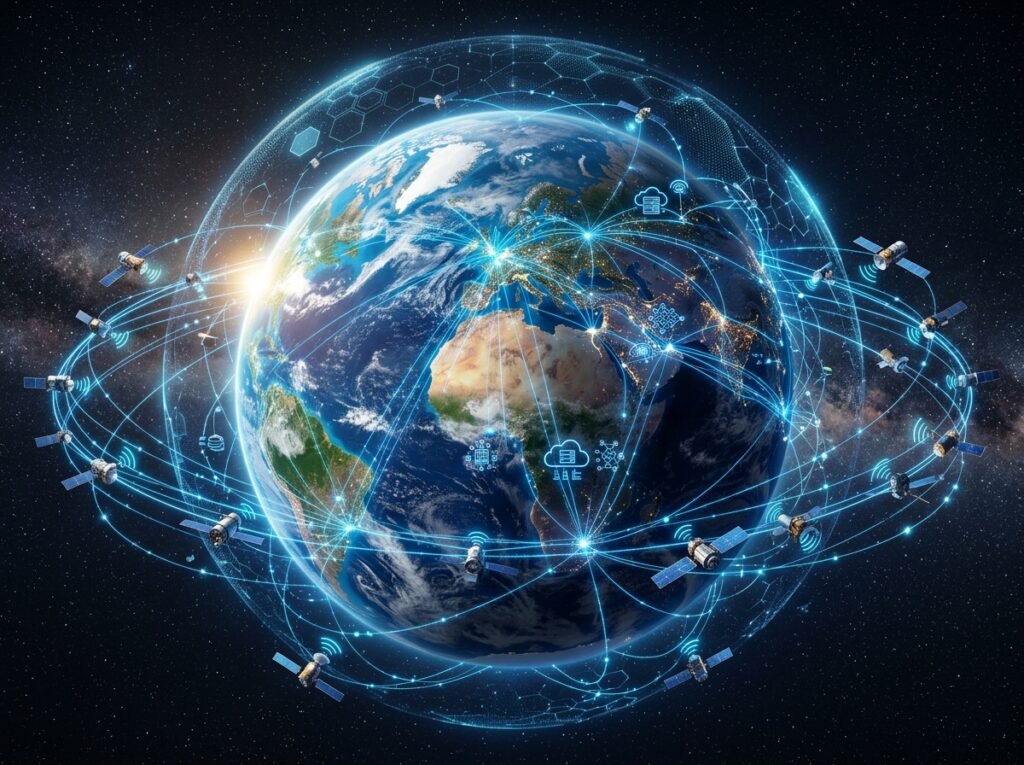
The Internet is the physical infrastructure—a massive network of connected computers, servers, cables, satellites, and wireless systems that transport data worldwide.
The World Wide Web is one of the services that operates on top of the Internet. Websites, web pages, hyperlinks, and web browsers are all part of the Web, not the Internet itself.
A simple analogy makes this easier to understand:
- Internet = Roads
- World Wide Web = Cars driving on those roads
The roads existed before the cars, just as the Internet existed before the Web.
Tim Berners-Lee and the Birth of the World Wide Web
In 1989, British computer scientist Tim Berners-Lee introduced the World Wide Web while working at CERN.
His goal was to make it easier for researchers to share documents across different computers.
To achieve this, he created several technologies that are still used today:
- HTML (HyperText Markup Language)
- HTTP (HyperText Transfer Protocol)
- URLs (Uniform Resource Locators)
- The first web browser
- The first website
Without these innovations, browsing websites would not be possible.
How the Internet Changed Everyday Life
Over the past few decades, the Internet has transformed almost every aspect of human life. Communication became instant through email, messaging apps, and video calls. Businesses expanded globally through e-commerce. Students gained access to unlimited educational resources. Doctors began offering online consultations, while entertainment shifted from television to streaming platforms.
Today, technologies such as cloud computing, artificial intelligence, smart homes, remote work, and online banking all depend on the Internet. Billions of connected devices exchange information every second, making the Internet one of the most important inventions in history.
Interesting Facts About the Internet
- The first ARPANET message was simply “LO” because the system crashed before “LOGIN” was completed.
- More than five billion people worldwide now use the Internet.
- Every second, millions of emails, searches, videos, and online transactions occur across the Internet.
- The Internet has no single owner. It operates through cooperation among organizations, governments, service providers, and technical standards bodies.
- The Internet continues to evolve with technologies such as IPv6, fiber optics, satellite Internet, and 5G connectivity.
Conclusion
The story of the Internet is not the story of one inventor. It is the story of human curiosity, teamwork, and continuous innovation.
From the earliest packet-switching concepts to ARPANET, from TCP/IP to the World Wide Web, every breakthrough built upon previous discoveries. Millions of people now benefit every day from technologies created by researchers who believed that computers should communicate more efficiently.
The next time you open a website, send a message, or watch a video online, remember that you are using one of the greatest collaborative achievements in modern history.
Frequently Asked Questions (FAQs)
Who invented the Internet?
No single person invented the Internet. It was developed through the combined efforts of many scientists and engineers over several decades.
Who is known as the Father of the Internet?
Vinton Cerf and Robert Kahn are widely recognized as the Fathers of the Internet because they developed the TCP/IP protocols.
Who invented the World Wide Web?
Tim Berners-Lee invented the World Wide Web in 1989 while working at CERN.
Is the Internet the same as the Web?
No. The Internet is the global network of connected computers, while the World Wide Web is a service that runs on top of the Internet.