What Is the World Wide Web (WWW)? Internet vs Web Explained
If you’ve ever used Google, watched videos on YouTube, read news online, or shopped on Amazon, you’ve probably used the World Wide Web. However, many people believe that the Internet and the World Wide Web are exactly the same thing. Although these terms are often used interchangeably in everyday conversation, they actually refer to two completely different technologies.
Understanding the difference between the Internet and the World Wide Web is one of the most important concepts for anyone learning about technology. Once you understand how they work together, many other topics such as websites, web browsers, domains, servers, cloud computing, and web development become much easier to understand.
In this guide, we’ll explore what the World Wide Web really is, how it was invented, how it works behind the scenes, and why people often confuse it with the Internet.
What Is the World Wide Web?
The World Wide Web (WWW), commonly called the Web, is a collection of billions of web pages that are connected through hyperlinks and accessed using Internet browsers such as Google Chrome, Microsoft Edge, Mozilla Firefox, Safari, and Opera.
Every website you visit is actually a part of the World Wide Web. Whether you’re reading an article, checking the weather, watching online videos, or browsing an online store, you’re interacting with web pages that exist on the Web.
In simple words, the World Wide Web is an information system that allows people to access websites and web pages through the Internet.
What Is the Internet?
Before understanding the Web, it’s important to understand the Internet.
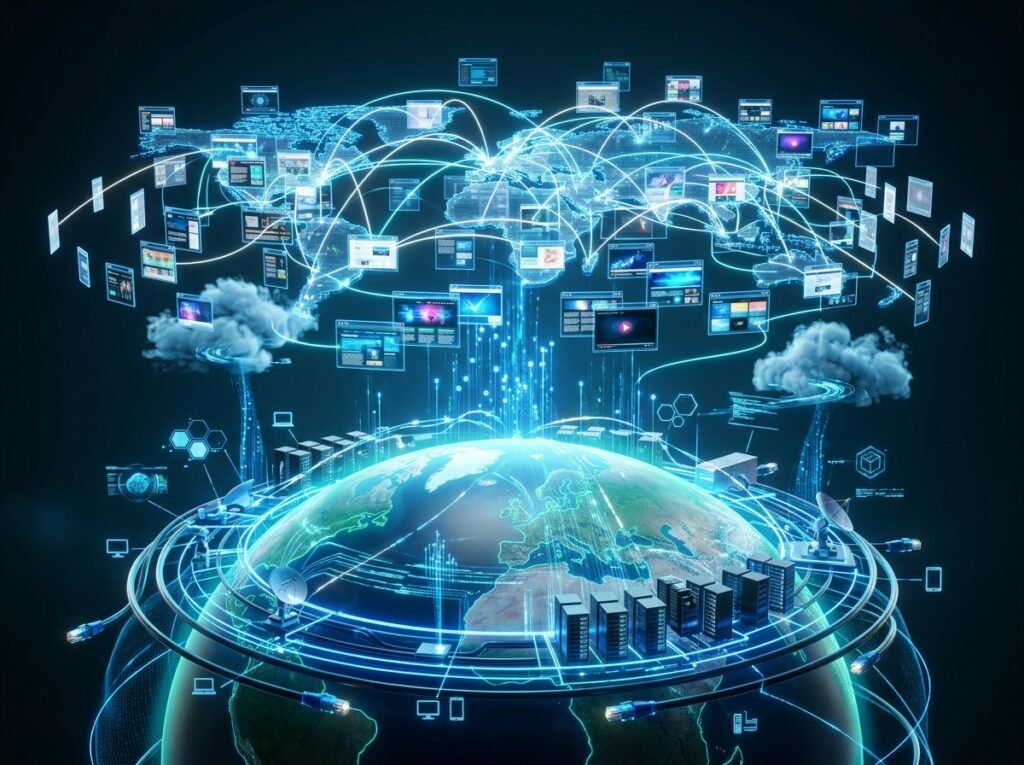
The Internet is a massive global network made up of billions of connected devices including computers, servers, smartphones, routers, fiber optic cables, satellites, and wireless communication systems.
Its primary purpose is to move data from one device to another.
The Internet itself doesn’t contain websites. Instead, it provides the infrastructure that allows websites, emails, online games, video calls, and many other services to function.
You can think of the Internet as the world’s largest transportation network.
The Simplest Way to Understand the Difference
Imagine your city has thousands of roads.
The roads allow cars, buses, motorcycles, and trucks to travel from one place to another.
Now imagine those vehicles represent websites, videos, emails, and social media.
- The Internet = The roads.
- The World Wide Web = The vehicles traveling on those roads.
Without roads, vehicles cannot move.
Similarly, without the Internet, the World Wide Web cannot exist.
However, roads can exist without cars, just as the Internet can exist without the Web because it also supports many other services like email, online gaming, cloud storage, Voice over IP (VoIP), and file transfers.
Who Invented the World Wide Web?
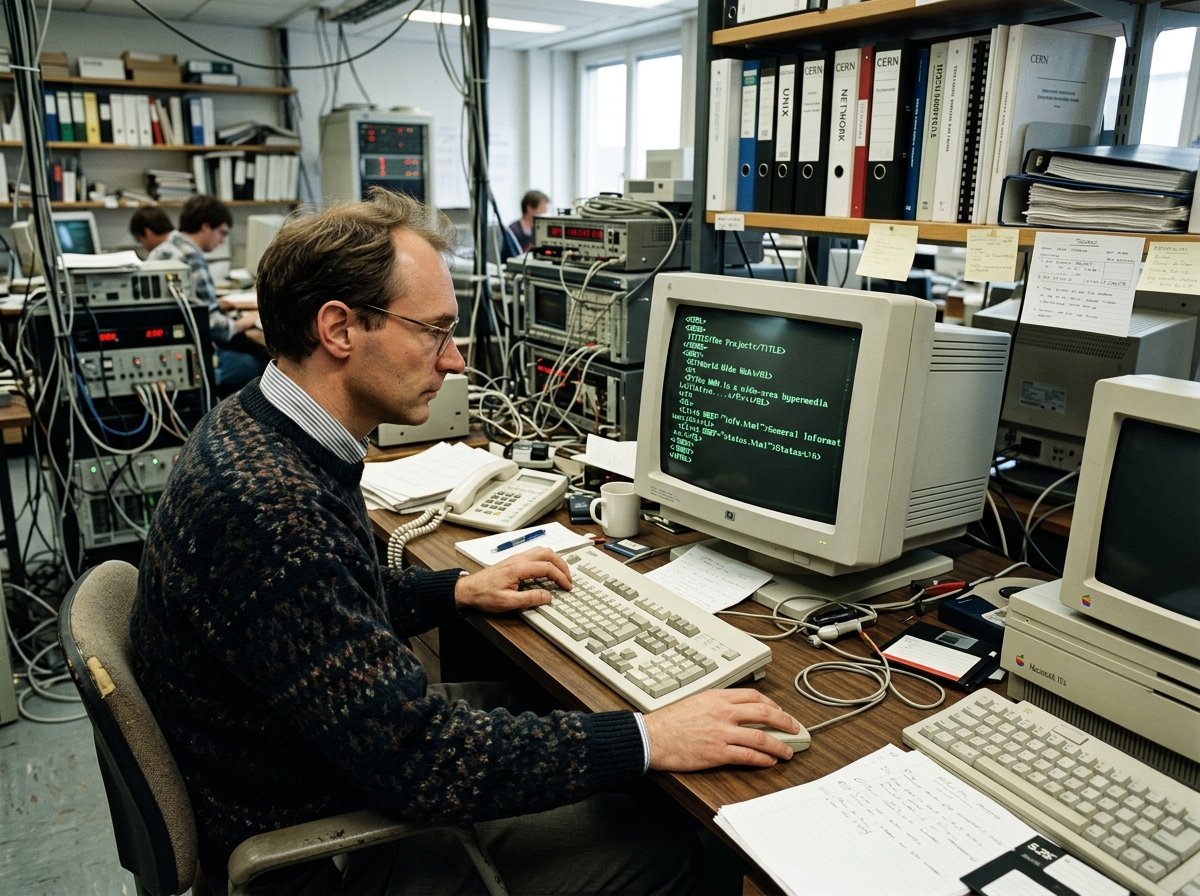
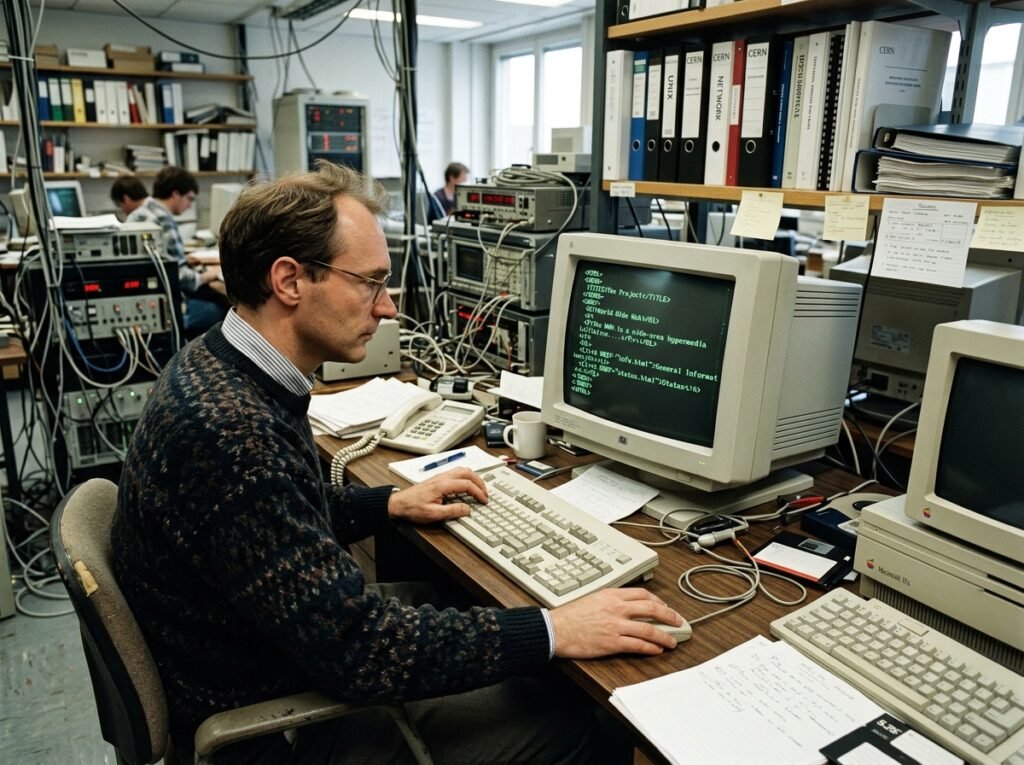
The World Wide Web was invented in 1989 by British computer scientist Sir Tim Berners-Lee while working at CERN, the European Organization for Nuclear Research in Switzerland.
At that time, scientists working at CERN had difficulty sharing research documents because different computers stored information in different formats.
Tim Berners-Lee wanted to create a simple system where researchers could easily access documents regardless of the computer they were using.
This idea eventually became the World Wide Web.
The Technologies Behind the Web
The Web works because several important technologies work together.
HTML
HTML (HyperText Markup Language) is used to create web pages. It tells browsers how headings, paragraphs, images, buttons, and links should appear.
HTTP
HTTP (HyperText Transfer Protocol) is the communication system used between your browser and a web server.
Today, most websites use the secure version called HTTPS, which encrypts information for better security.
URL
A URL (Uniform Resource Locator) is the address of a webpage.
For example:
https://nexowix.online
This unique address helps browsers locate the exact webpage you want to visit.
Web Browser
A browser is software that displays websites on your screen.
Popular browsers include:
- Google Chrome
- Microsoft Edge
- Mozilla Firefox
- Safari
- Opera
The browser downloads information from a web server and converts HTML code into the beautiful webpages you see every day.
How Does the World Wide Web Work?
Let’s imagine you type https://nexowix.online into your browser.
Several things happen within a fraction of a second.
- Your browser asks DNS to find the website’s IP address.
- DNS responds with the correct server address.
- Your browser sends an HTTP or HTTPS request.
- The web server receives your request.
- The server sends HTML, CSS, JavaScript, images, and other files.
- Your browser combines everything and displays the webpage.
This entire process usually takes less than two seconds on a modern Internet connection.
Why Do People Confuse the Internet and the Web?
Most people spend their online time browsing websites, reading blogs, watching videos, and using search engines. Since all of these activities happen on the Web, many people naturally assume they’re using the Internet itself.
In reality, they’re using just one service that runs on top of the Internet.
Email, cloud storage, online gaming, video conferencing, and many messaging applications also use the Internet but are not part of the World Wide Web.
The Evolution of the World Wide Web
Since its invention in 1989, the World Wide Web has gone through several major stages of development. Each stage introduced new features that completely changed how people interact with websites.
Web 1.0 – The Read-Only Web
The first generation of the Web, often called Web 1.0, appeared during the 1990s. Most websites were simple and static. Visitors could only read information, and there was very little interaction. Personal blogs, company information pages, and educational websites were common during this era.
Web 2.0 – The Interactive Web
As Internet technology improved, the Web evolved into what we now call Web 2.0. Websites became interactive, allowing users to create content instead of simply reading it.
Platforms such as YouTube, Facebook, X (formerly Twitter), Instagram, Wikipedia, and many blogs became popular because users could upload videos, write comments, share photos, and communicate with others instantly.
Today’s Internet is largely based on Web 2.0 technologies.
Web 3.0 – The Intelligent Web
The next stage is often referred to as Web 3.0. Although it is still evolving, its goal is to make the Web smarter, more secure, and more personalized.
Modern technologies such as Artificial Intelligence (AI), blockchain, machine learning, semantic search, and decentralized applications are helping shape this new generation of the Web.
Instead of simply displaying information, future websites will better understand user preferences and provide more intelligent, personalized experiences.
Why Is the World Wide Web Important?
The World Wide Web has transformed nearly every aspect of modern life. It has made information more accessible than ever before and connected people across continents in ways that were once unimaginable.
Some of its biggest benefits include:
- Instant access to educational resources.
- Online shopping from anywhere in the world.
- Digital banking and financial services.
- Remote work and online collaboration.
- Entertainment through streaming platforms.
- Easy communication through web applications.
- Access to government and healthcare services online.
Today, billions of people rely on the Web every day for learning, business, communication, and entertainment.
Common Misconceptions About the Web
There are several myths that often confuse beginners.
- Myth: The Internet and the World Wide Web are the same.
Reality: The Web is only one service that operates on the Internet. - Myth: One person invented the Internet.
Reality: The Internet was developed through decades of collaboration by many researchers. - Myth: Every online service is part of the Web.
Reality: Services like email, FTP, and many online games use the Internet but are not part of the World Wide Web.
The Future of the World Wide Web
The Web continues to evolve rapidly. Faster Internet speeds, cloud computing, artificial intelligence, augmented reality, virtual reality, and decentralized technologies are changing how websites are built and experienced.
In the coming years, websites are expected to become even faster, smarter, and more interactive. AI-powered assistants, voice-based browsing, personalized content, and immersive experiences will likely become standard features of the modern Web.
Despite these technological advances, the core idea introduced by Tim Berners-Lee remains the same: making information easy to share and accessible to everyone.
Conclusion
The World Wide Web is one of the most influential inventions in modern history. Although many people confuse it with the Internet, the two are fundamentally different. The Internet is the global infrastructure that connects devices, while the World Wide Web is a system of websites and web pages that runs on top of that infrastructure.
Understanding this distinction helps build a stronger foundation for learning web development, networking, cybersecurity, cloud computing, and many other technology-related subjects. Whether you’re a student, developer, or simply curious about technology, knowing how the Web works is an essential step toward understanding today’s digital world.
Frequently Asked Questions (FAQs)
What is the World Wide Web in simple words?
The World Wide Web is a collection of websites and web pages that people access through Internet browsers using the Internet.
Who invented the World Wide Web?
Sir Tim Berners-Lee invented the World Wide Web in 1989 while working at CERN.
Is the Internet the same as the World Wide Web?
No. The Internet is the global network that connects devices, while the World Wide Web is a service that allows users to access websites.
Can the Internet exist without the Web?
Yes. The Internet supports many services besides the Web, including email, cloud storage, online gaming, and file transfers.
Why is the World Wide Web important?
It allows people to access information, communicate, learn, shop, work, and use countless online services from almost anywhere in the world.
Final Thoughts
Every time you visit a website, search on Google, read a blog, or stream a video, you’re experiencing the power of the World Wide Web. While the Internet provides the connection, the Web delivers the content that has transformed education, business, communication, and entertainment. Understanding the relationship between these two technologies is one of the first and most valuable lessons for anyone beginning their journey into the world of technology.