What Is Deep Learning? Understanding the Technology Behind Modern AI
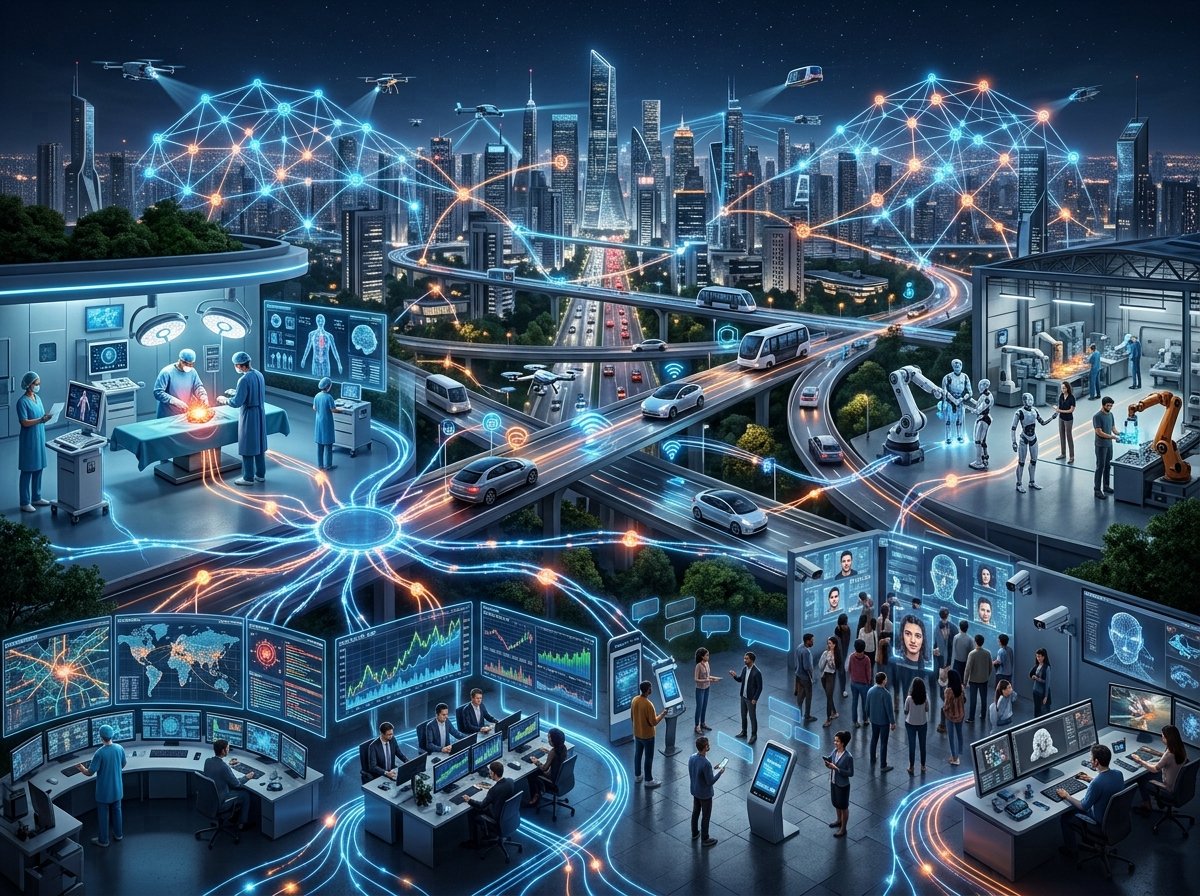
Artificial Intelligence has transformed the way we interact with technology. From virtual assistants that understand our voice to self-driving cars that recognize roads and traffic signs, many of today’s most advanced innovations are powered by a technology known as Deep Learning.
Although the term may sound highly technical, Deep Learning is simply a more advanced form of Machine Learning. It enables computers to analyze enormous amounts of data, recognize complex patterns, and make highly accurate decisions with minimal human intervention.
Without Deep Learning, many of the AI tools we use every day—including voice assistants, image recognition systems, language translation services, and modern chatbots—would not perform nearly as well as they do today.
In this beginner-friendly guide, you’ll learn what Deep Learning is, how it works, how it differs from Machine Learning, where it is used, and why it is considered one of the most important technologies driving the future of Artificial Intelligence.
What Is Deep Learning?
Deep Learning is a specialized branch of Machine Learning that uses artificial neural networks with multiple layers to process information and solve complex problems.
Unlike traditional Machine Learning algorithms, Deep Learning models can automatically discover important features within data instead of relying heavily on manually designed rules.
This allows Deep Learning systems to analyze images, videos, speech, text, and other complex data with remarkable accuracy.
Why Is It Called “Deep” Learning?
The word “Deep” refers to the multiple layers inside an artificial neural network.
Each layer processes information received from the previous layer and passes increasingly refined information to the next layer.
The deeper the network, the more complex patterns it can recognize.
This layered approach allows Deep Learning models to solve problems that would be extremely difficult using traditional programming techniques.
What Are Artificial Neural Networks?
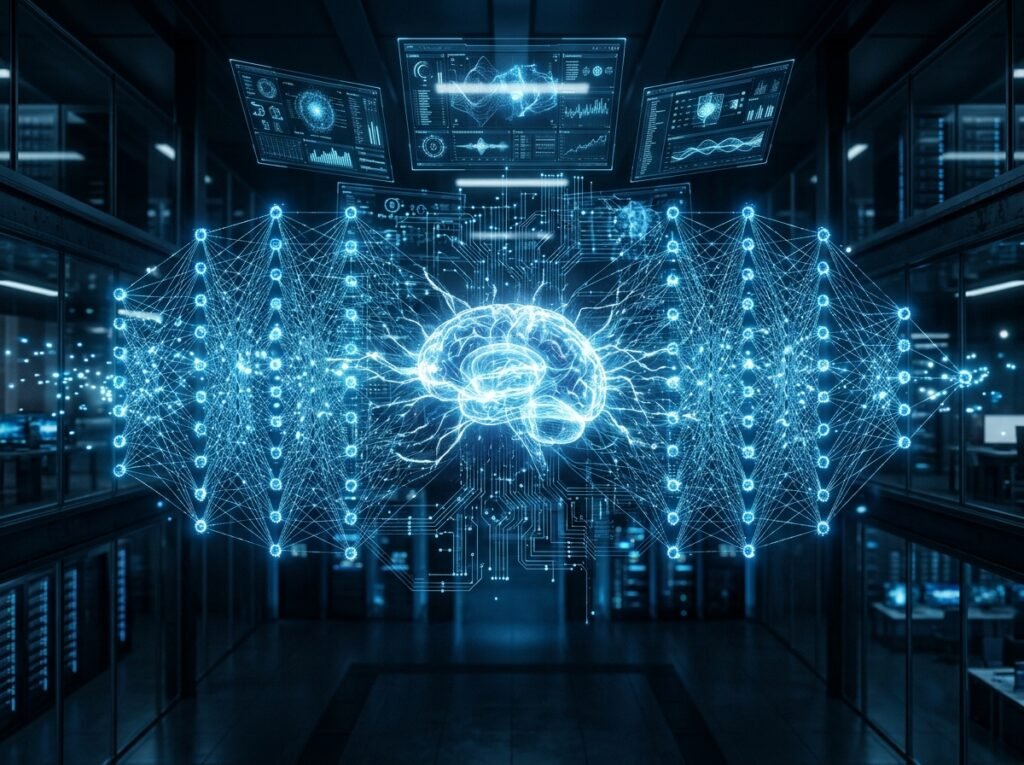
Deep Learning is inspired by the human brain.
The human brain contains billions of interconnected neurons that communicate by sending electrical signals.
Similarly, Deep Learning models use mathematical structures called Artificial Neural Networks (ANNs).
These networks consist of thousands or even millions of interconnected artificial neurons that work together to analyze information.
Although they are inspired by biology, they are mathematical models running on powerful computers—not actual human brains.
How Does Deep Learning Work?
A Deep Learning system usually follows these steps:
- Large amounts of data are collected.
- The data is cleaned and prepared.
- The neural network begins analyzing the information.
- Each hidden layer extracts more detailed features.
- The model makes predictions.
- Errors are measured.
- The network adjusts itself and improves accuracy.
- This process repeats thousands or even millions of times.
With enough training data and computing power, Deep Learning models can achieve impressive accuracy across many different tasks.

An Easy Example
Imagine teaching someone to recognize different breeds of dogs.
At first, they may only notice obvious differences such as size or color.
After seeing thousands of examples, they begin recognizing finer details like ear shape, fur texture, facial structure, and body proportions.
Deep Learning behaves in a similar way.
The first layers identify simple features such as edges and colors. The deeper layers recognize shapes, objects, and eventually complete images or meaningful patterns.
Why Is Deep Learning So Powerful?
One of the biggest advantages of Deep Learning is its ability to automatically learn features directly from raw data.
Traditional Machine Learning often requires engineers to manually select which characteristics are important.
Deep Learning performs much of this work automatically, making it highly effective for complex tasks involving images, speech, natural language, and video.
Everyday Applications of Deep Learning
You may already use Deep Learning dozens of times every day without realizing it.
- Face Unlock on smartphones.
- Google Lens image recognition.
- ChatGPT and AI assistants.
- Google Translate language translation.
- YouTube automatic subtitles.
- Netflix recommendation systems.
- Medical image analysis.
- Self-driving vehicle research.
- Voice assistants like Siri and Alexa.
- Fraud detection in online banking.
These real-world applications demonstrate how Deep Learning has become one of the core technologies powering today’s intelligent digital services.